


Introduction
Methodology
Technological Advancements in Vertical Farming
Sensing and IoT components
Precision irrigation and nutrient delivery
LED lighting and spectral optimisation
Automation and robotics
Machine learning and data analytics
Case Studies
Singapore: Hydroponics and LED innovation
Japan: Aeroponics and robotics
Netherlands: Aquaponics and water recycling
Challenges and Limitations of Agricultural Technologies
Cost: High setup expenses
Energy: Intensive consumption
Future Directions
Renewable energy: Solar and wind integration
Low-cost sensors: Democratizing technology
Modular designs: Scalable and adaptable systems
Conclusion
Declaration of Generative AI and AI-Assisted Technologies in Writing Process
Introduction
Vertical farming is a subset of controlled environment agriculture (CEA) that offers resilience against weather variability and extreme climatic events, such as droughts, floods, and temperature extremes, which are becoming increasingly frequent due to climate change (Dutta et al., 2024). Vertical growing systems often utilize CEA techniques to optimize growing conditions, including light, temperature, humidity, and nutrient levels. Vertical farming (Fig. 1), a cornerstone of smart and precision agriculture, is a revolutionary approach to crop production that involves growing plants in vertically stacked layers within controlled environments, often situated in urban settings. Unlike conventional agriculture, which depends heavily on vast expanses of arable land, seasonal rainfall, and favorable weather conditions, vertical farming utilizes advanced engineering systems such as hydroponics, aeroponics, and aquaponics to cultivate crops indoors, regardless of external climatic factors. This method not only maximizes space usage but also significantly reduces the need for arable land, which is increasingly scarce due to rapid urbanisation and environmental degradation. All growing towers were equipped with a close loop Ebb & Flow hydroponic system (Fig. 1).
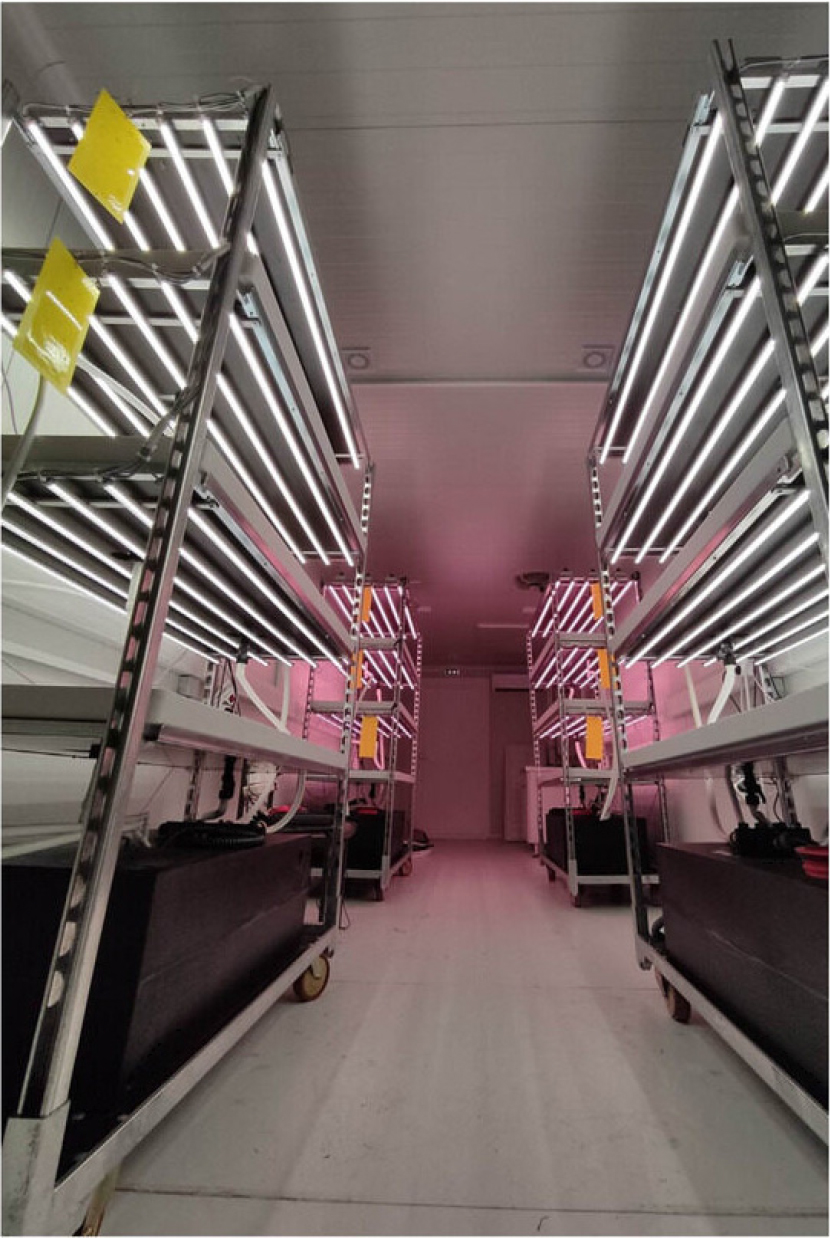
Fig. 1.
Interior of the vertical farm facility showing the 4 towers with the two different LED spectra (WHITE and B/R/FR). Source: Avgoustaki et al. (2025).
Global demographic trends further underscore the relevance of vertical farming. According to the UN (2019), the global population is projected to reach 9.7 billion by 2050, with a significant concentration in urban areas. This urban growth has reduced available agricultural land and increased pressure on food production systems. Traditional farming methods are struggling to meet the rising food demand in a sustainable manner, particularly under the constraints of land degradation, water scarcity, and climate variability. In this context, vertical farming offers a promising alternative by enabling year-round crop production in cities, closer to consumers, thereby improving food security, reducing post-harvest losses, and minimizing the carbon footprint associated with food transportation.
Smart and precision agriculture technologies are integral to the functionality and success of vertical farming systems. Smart agriculture incorporates Internet of Things (IoT) devices, sensors, and automation to collect and analyse real-time data on crop growth conditions, allowing for informed decision-making and adaptive control of the growing environment. Precision agriculture, conversely, emphasizes the fine-tuning of inputs such as water, nutrients, and light to match the specific needs of individual plants. This input optimisation leads to substantial increases in efficiency and sustainability. As noted by Ahmed et al. (2018) and Ogunlowo et al. (2021), the integration of smart and precision technologies allows farmers to achieve levels of resource use efficiency that are unattainable through traditional open-field farming.
As of 2025, vertical farming is increasingly characterized by integration with cutting-edge technologies, such as IoT, robotics, AI, and big data analytics. These technologies work synergistically to monitor plant health, control microclimatic conditions, and automate farming operations such as seeding, transplanting, and harvesting. For example, AI algorithms can process multispectral images to detect early signs of disease or nutrient deficiencies, enabling timely interventions. IoT devices collect granular data on temperature, humidity, CO2 concentration, and light intensity, which are analyzed in real-time to maintain optimal growing conditions. Robotics systems further enhance labor efficiency by performing repetitive tasks with high precision and consistency.
One of the most remarkable advantages of vertical farming is its resource efficiency. As reported by Quy et al. (2022), vertical farming systems can achieve water savings of 70 to 95% compared to traditional soil-based agriculture. This is achieved through the recirculation and precise application of water, eliminating runoff and evaporation losses. Additionally, the yields per unit area in vertical farms can be 10 to 20 times higher than those in open fields due to the ability to grow crops in multiple layers and under ideal growth conditions. These benefits make vertical farming particularly attractive in regions facing acute water scarcity or limited access to fertile land.
Beyond environmental and logistical benefits, vertical farming contributes to socio-economic development. Urban farms can create employment opportunities in technology-driven agricultural sectors, encompassing areas such as agronomy, systems engineering, data science, and logistics. They also offer educational and community engagement opportunities, promoting awareness about sustainable food systems and fostering local food resilience. Moreover, vertical farming has the potential to play a crucial role in disaster preparedness and food supply continuity during pandemics, conflicts, or other disruptions to global supply chains (Mishraet al., 2024; Panotra et al., 2024).
Despite the numerous advantages, vertical farming is not without challenges. High initial capital investment, energy costs, and technological complexity remain significant barriers to widespread adoption. The economic viability of vertical farms often depends on cultivating high-value crops such as leafy greens, herbs, and microgreens, which may not be sufficient to meet the caloric needs of the global population. Additionally, while automation reduces labor requirements, it necessitates a skilled workforce capable of operating and maintaining sophisticated systems, which may limit accessibility in low-income regions (Mishra et al., 2024).
Research and development are ongoing to address these challenges. Innovations in renewable energy integration, such as the use of solar panels and energy storage systems, are helping to reduce the carbon footprint and operational costs of vertical farms (Yang et al., 2022). Developments in crop breeding and genetic engineering are also aimed at producing plant varieties better suited to indoor environments, with shorter growth cycles, higher nutritional content, and improved disease resistance.
These systems thrive in controlled environments, mitigating weather variability and reducing city transport emissions. This review aims to:
• assess recent engineering advancements in vertical farming,
• evaluate their impact on efficiency and productivity, and
• identify challenges and propose future solutions.
Methodology
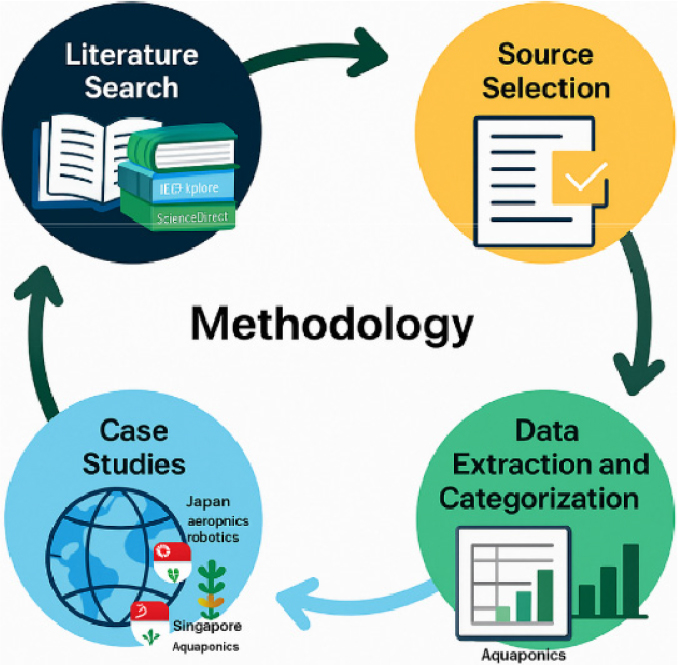
This review adopts a systematic and integrative approach to evaluate recent advancements in smart and precision agriculture, with a specific focus on vertical farming technologies and their applications. The methodology encompasses a multistep process to gather, analyse, and synthesize data from diverse sources, ensuring a comprehensive and up-to-date analysis as of March 2025. The primary objectives were to assess engineering innovations, quantify their impacts on efficiency and productivity, identify persistent challenges, and propose future directions for sustainable urban agriculture. The following steps outline the methodology employed: Three representative case studies, namely Singapore (hydroponics and LED innovation), Japan (aeroponics and robotics), and the Netherlands (aquaponics and water recycling), were selected to illustrate real-world applications of the technologies reviewed. Selection was based on geographic diversity, technological variety, and availability of detailed performance data (e.g., yields in tonnes per hectare [t·ha-1] and resource savings percentages). Primary data from these cases were sourced from peer-reviewed studies, industry reports, and company publications (e.g., AeroFarms, Bowery Farming, Vertical Harvest), supplemented by secondary analyses where necessary (Mok et al., 2020; Liu et al., 2022). Each case was evaluated for its technological components, efficiency gains, and scalability potential, providing concrete examples to ground the broader review. Additionally, a comparative analysis was conducted to benchmark vertical farming systems against traditional agriculture, focusing on metrics such as water use efficiency, energy consumption per yield, and labor intensity, to provide a clearer perspective on the technological advantages and trade-offs. Fig. 2 shows the steps taken in the review of the literature.
Technological Advancements in Vertical Farming
To provide a concise conceptual framework, the advancements can be grouped into four key domains: 1) sensing and data systems, 2) energy and environmental controls, 3) automation and robotics, and 4) crop-specific cultivation platforms. Each domain is analyzed with a focus on technical specifications, performance metrics, and comparative advantages over traditional farming systems, supported by quantitative data and illustrative figures to distil key insights.
Vertical farming represents a transformative shift in agriculture, harnessing advanced technology to grow food in stacked layers within controlled environments, often in urban settings. This approach addresses critical issues like land scarcity, water shortages, and climate unpredictability by integrating innovations such as hydroponics, AI, LED lighting, and robotics. Unlike traditional farming, which is constrained by seasonal cycles and geographic limitations, vertical farming enables year-round production with significantly reduced resource inputs. For example, it uses up to 95% less water than conventional methods, making it a sustainable alternative in water-stressed regions (Velasco-Muñoz et al., 2018). The adoption of these technologies has accelerated in recent years, driven by the need to feed a global population projected to reach 9.7 billion by 2050. A few farmers are at the forefront, deploying innovative systems that optimize plant growth while minimising environmental impact. The global vertical farming market, valued at $5.5 billion in 2023 (Wilkinson, 2024), is expected to grow exponentially, reflecting the promise of these advancements in reshaping food production (Statista, 2023).
A cornerstone of vertical farming’s success is the development of precision agriculture technologies, particularly AI and automation. AI-driven systems collect and analyze data from sensors monitoring variables such as temperature, humidity, and nutrient levels, enabling real-time adjustments to create ideal growing conditions. This precision reduces waste and enhances crop yields, with studies showing up to a 30% increase in productivity compared to traditional farming (Akhter and Sofi, 2022; Akpenpuun et al., 2023). Robotics complements AI by automating labor-intensive tasks like seeding, transplanting, and harvesting. For instance, San Francisco-based Plenty uses robotic arms to manage its vertical farms, cutting labor costs and improving scalability. Automated vertical farms have achieved a 40% reduction in operational downtime, highlighting their efficiency (Chowdhury et al., 2023). Additionally, drones and conveyor systems streamline plant movement within multitiered setups, maximising space utilisation. These technologies not only boost output but also make vertical farming viable in urban areas where labor and space are at a premium.
Advancements in lighting technology, particularly the use of LEDs, have revolutionized the cultivation of plants indoors. LEDs offer energy-efficient, customisable light spectra that mimic sunlight, promoting photosynthesis and accelerating growth cycles. Unlike older systems like fluorescent or high-pressure sodium lamps, LEDs emit less heat and can be tuned to specific wavelengths, such as red and blue light, to optimize different stages of plant development. Research has demonstrated that LED-optimized lighting increased leafy green yields by 25% while reducing energy consumption by 50% compared to traditional setups (Fylladitakis, 2023). Some farms have introduced smart LED systems that integrate with IoT platforms, adjusting light intensity based on plant needs and external conditions. Solar-powered vertical farms can reduce energy costs by up to 35%, thereby enhancing their economic and environmental sustainability by lowering their carbon footprint (Mok et al., 2020). This synergy of lighting and energy innovation is a significant development for indoor agriculture.
While technological advancements have propelled vertical farming forward, challenges such as high startup costs and energy demands persist, however, solutions are emerging. The integration of biotechnology, including clustered regularly interspaced short palindromic repeats (CRISPR)-edited crops designed for indoor conditions, promises even higher yields, with reports of a 15% increase in nutrient density for gene-edited lettuce (Benke and Tomkins, 2023). To contextualize these advancements, Table 1 compares key metrics of vertical farming technologies against traditional agriculture, highlighting superior resource efficiency and yield potential. At the same time, Fig. 3 synthesizes the interplay of sensing, irrigation, lighting, and robotics in a typical vertical farm system. As urban populations continue to grow and climate change disrupts traditional agriculture, the combination of technology and sustainability in vertical farming presents a promising outlook for the future. Its ability to produce fresh, local food year-round, with minimal environmental impact, positions it as a vital tool in the global food system. With continued innovation and investment, vertical farming could bridge the gap between technological progress and the basic need of nourishment. Beyond increasing crop yields and optimising resource use, vertical farming addresses critical challenges of modern food production, such as land scarcity, climate volatility, and supply chain disruptions. Producing food closer to urban centres reduces carbon footprints, minimizes food waste, and enhances food security for growing populations.
Table 1.
Comparison of vertical farming and traditional agriculture.
Source: Mishra et al. (2024); Avgoustaki et al. (2025).
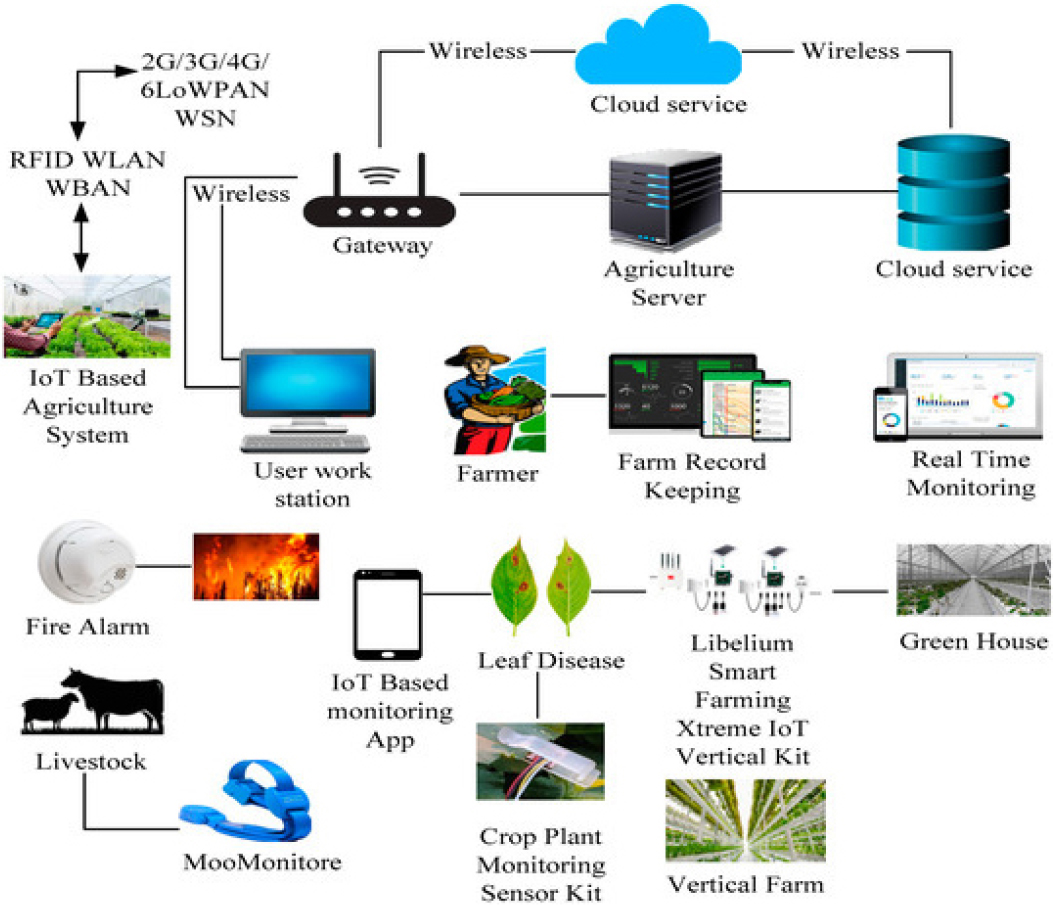
Fig. 3.
Sensing and Internet of Things (IoT) systems integration in urban farming. 6LoWPAN, IPv6 over Low-power Wireless Personal Area Networks; WSN, wireless sensor network; WBAN, wireless body area network. Source: Saad et al. (2021).
Sensing and IoT components
Environmental sensors
Environmental sensors are a cornerstone of modern vertical farming, providing the precision necessary to create and maintain optimal growing conditions across multiple stacked tiers, thereby enhancing crop productivity and resource efficiency. Devices such as the SHT31, a compact sensor renowned for its accuracy in measuring temperature (±0.3℃) and humidity (±2% relative humidity), enable farmers to monitor and adjust microclimates with remarkable granularity (Soussi et al., 2024). This is crucial in vertical farms, where conditions can vary significantly between tiers due to differences in light exposure, air circulation, and heat distribution. Complementing these are photosynthetically active radiation (PAR) sensors, which measure light wavelengths between 400 to 700 nanometers, the range most effective for driving photosynthesis. By ensuring that plants receive the right amount and quality of light, PAR sensors help overcome the challenges of indoor cultivation, where artificial sources, such as LEDs, replace natural sunlight. These sensors provide real-time data to integrated control systems, enabling automated adjustments to environmental factors such as ventilation, humidity, and light intensity. A compelling example comes from a 500 m2 vertical farm that utilized SHT31 and PAR sensors to optimize its heating, ventilation, and air conditioning (HVAC) system. By dynamically adjusting temperature and airflow based on sensor readings, the farm achieved a 20% reduction in energy use, demonstrating significant cost savings and a reduced carbon footprint (Geng et al., 2019). This efficiency is particularly valuable in urban settings, where energy costs can be a limiting factor for vertical farming operations. Beyond temperature and light, the latest sensor arrays include tools such as CO2 detectors to regulate carbon dioxide levels for photosynthesis and pH sensors to monitor nutrient solutions in hydroponic systems, thereby creating a comprehensive environmental management network. The data collected by these sensors can also be analyzed using AI to predict plant growth patterns and preempt issues such as mold or nutrient deficiencies, further enhancing operational resilience. As vertical farming scales to meet global food demands, environmental sensors stand out as a critical innovation, bridging the gap between technological sophistication and sustainable agriculture by ensuring that every tier operates at peak performance with minimal environmental impact.
Soil and nutrient sensors
Electrochemical sensors have become a game-changing technology in vertical farming, particularly within hydroponic systems, where they enhance nutrient management with unprecedented precision, driving both efficiency and sustainability. These sensors measure key parameters, such as pH, ideally kept between 5.5 and 6.5, to ensure nutrients remain bioavailable to plants, and electrical conductivity (EC), maintained between 1.5 and 2.5 mS·cm-1, to monitor the concentration of dissolved salts in the nutrient solution (Dhanaraju et al., 2022). A hydroponic vertical farm equipped with these sensors reduced nutrient waste by 15% compared to traditional methods, which rely on periodic manual testing. This efficiency stems from the integration of sensors with automated nutrient delivery systems, which adjust the flow of fertilizers in real-time based on sensor data, ensuring plants receive precisely what they need (Qazi et al., 2022). Beyond cost savings, this reduction in nutrient overuse has environmental benefits, decreasing the risk of runoff that can pollute local water systems, a persistent issue in conventional farming. The versatility of sensor technology extends to its compatibility with IoT frameworks, enabling remote monitoring and long-term data analysis that can refine nutrient formulas for specific crops. Recent advancements have also improved sensor design, making them more resistant to fouling from organic matter and more affordable, thus making them accessible to smaller-scale vertical farms. The integration of these sensors with machine learning (ML) models further enhances their utility, enabling predictive nutrient management that anticipates plant needs based on growth stage and environmental conditions, resulting in an additional 5 - 10% reduction in waste (Eze et al., 2025). Table 2 summarizes the specifications and performance impacts of key environmental sensors, illustrating their role in achieving microclimate control and resource efficiency.
Table 2.
Specifications and performance impacts of key environmental sensors.
Source: Morella et al. (2023).
Fig. 3 illustrates a schematic of the integration of sensing, irrigation, lighting, and robotics in a vertical farming system, highlighting the data flow and automation loops for optimized crop production.
Precision irrigation and nutrient delivery
Precision irrigation and nutrient delivery systems have become foundational to the success of vertical farming, enabling highly efficient resource use and enhanced crop productivity in controlled, soilless environments. Integrated with sensors, automated pumps, and data analytics, precision irrigation ensures that plants receive optimal hydration and nutrition at every growth stage, addressing global challenges like water scarcity and food security (Zakir et al., 2022). Table 3 presents a comparison of precision irrigation systems in vertical farming systems.
Table 3.
Comparison of precision irrigation systems in vertical farming.
Source: Mishra et al. (2024).
LED lighting and spectral optimisation
LED lighting and spectral optimisation have revolutionized vertical farming by providing energy-efficient, customisable illumination that enhances plant growth and maximizes yields in indoor environments. Unlike traditional farming, which depends on unpredictable sunlight, vertical farms rely entirely on artificial light sources to drive photosynthesis across stacked tiers. LEDs have emerged as the gold standard due to their superior efficiency, longevity, and ability to deliver tailored wavelengths that meet the specific needs of different crops. These advancements have addressed early criticisms of vertical farming’s high energy demands, making it a more sustainable and economically viable option. Integrated with innovative intelligent control systems, LEDs enable precise adjustments to light intensity and spectra, optimising conditions for everything from leafy greens to fruiting plants. Research and industry adoption underscore how LED technology is transforming indoor agriculture, reducing operational costs while boosting productivity, and positioning vertical farming as a key player in the future of food production (Kozai et al., 2022). The technical specifications of LEDs, such as photosynthetic photon efficacy and spectral tuning capabilities, are critical to their success, as detailed in Table 4.
Table 4.
Technical specifications of LED lighting in vertical farming.
Automation and robotics
Automation and robotics are at the forefront of revolutionizing vertical farming, integrating advanced technologies to enhance efficiency, precision, and scalability in controlled indoor environments. These innovations, spanning robotic systems, AI, sensor networks, and cloud platforms, address pressing challenges like rising food demand, shrinking arable land, and high labor costs, offering a sustainable alternative to traditional agriculture. Unlike conventional farming, which relies on expansive fields and manual labor that is vulnerable to weather and seasonal constraints, vertical farming utilizes automation to enable year-round production in compact urban settings. Robots handle planting, irrigation, and harvesting, while AI optimizes growing conditions, making vertical farms a viable solution for a global population projected to reach 9.7 billion by 2050 (UN, 2019). The essence of automation in vertical farming lies in its ability to mechanize repetitive, labor-intensive tasks with robotic precision, significantly boosting operational efficiency. Planting, traditionally a manual process, is now executed by robots equipped with sophisticated seeders that deposit seeds into trays with exact spacing and depth. Iron Ox’s “Angus” robot, for example, employs computer vision to achieve planting accuracy within 1 millimeter, ensuring uniform germination and maximizing space in multitiered setups, a critical advantage in urban farms where every inch is valuable (Kurtser et al., 2020). Post-planting, automated irrigation systems, often linked to hydroponic or aeroponic setups, deliver water and nutrients directly to roots, controlled by algorithms that respond to real-time sensor data. These systems reduced water usage by 20% compared to manual methods, highlighting their resource efficiency (Lakhiar et al., 2024). Harvesting, another time-consuming task, has been transformed by robotic arms with soft grippers, which pick ripe produce at speeds up to three times faster than human workers without causing damage. These advancements have slashed labor costs by up to 30% in some operations, while ensuring the consistency and quality demanded by commercial markets, positioning automation as a linchpin for scaling vertical farming (Kabir et al., 2023).
AI enhances robotic capabilities by providing the analytical power to manage complex farm ecosystems. Sensors deployed throughout vertical farms monitor environmental variables, temperature, humidity, CO2 levels, and plant health, transmitting this data to AI platforms that analyse trends and adjust conditions in real-time. Bowery Farming utilizes AI to detect early signs of disease or nutrient deficiencies by analyzing leaf color and growth patterns, enabling proactive interventions that prevent crop loss (Mridha et al., 2021). ML models predict harvest times with over 90% accuracy, optimising supply chain logistics and reducing waste (Ai et al., 2020). AI-driven automation improved yield consistency by 25% in a 500 m2 vertical farm, demonstrating its reliability. Robotics extends this intelligence to physical tasks through autonomous carts and drones that navigate multitiered structures, transporting trays between growing zones and processing areas. The capability of modular robots to adapt to various farm layouts exemplifies this flexibility, minimising downtime and enhancing workflow. By eliminating human error and fatigue, AI and robotics create a data-driven, seamless operation that maximizes productivity and resource use.
Cloud platforms, such as Amazon Web Services (AWS) IoT and Microsoft Azure, amplify automation by enabling remote management and centralized control. These systems integrate data from sensors and robots into dashboards accessible via mobile devices, enabling operators to remotely monitor and adjust lighting, irrigation, and robotic functions (Chen et al., 2016). The implementation of AWS IoT in vertical farming can reduce labor costs by 25%, shifting workers to strategic roles like system optimisation (Mok et al., 2020). This remote capability is particularly valuable in urban environments, where farms may be distributed across repurposed buildings or skyscrapers. Automation also enhances traceability; blockchain-integrated robot tags produce digital records of their growth conditions, meeting consumer demand for transparency (Banerjee et al., 2020). This integration of cloud technology with robotics not only reduces labor but also scales operations efficiently, connecting multiple sites into a unified management framework.
Automated environmental control
Automated environmental control systems have become a linchpin in vertical farming, enabling precise regulation of climate and lighting conditions to maximize crop growth while minimizing resource use. These systems utilize advanced technologies, including proportional–integral–derivative (PID) controllers, timers, and sensor networks, to maintain stable microclimates across multi-tiered indoor setups, thereby overcoming the inherent variability of traditional outdoor farming. By automating temperature, humidity, and light schedules, vertical farms achieve consistent yields year-round, regardless of external weather conditions, while significantly reducing energy consumption. This precision is crucial in urban environments where space is limited and operational costs must be closely monitored. Research and real-world applications demonstrate how these automated systems enhance efficiency and sustainability, making them essential for scaling vertical farming to meet global food demands (Rivas-Sánchez et al., 2019).
Climate control is a cornerstone of automated environmental management, ensuring that temperature and humidity remain within optimal ranges for plant health. PID controllers play a key role by continuously adjusting HVAC systems to maintain temperature stability within ±1℃ and humidity within ±5%. These tight tolerances are vital for crops like lettuce or herbs, which thrive in specific conditions, typically 20 - 25℃ and 60 - 80% humidity, preventing stress that could stunt growth or invite disease. A vertical farm utilizing PID controllers achieved a 30% reduction in energy consumption compared to manual HVAC adjustments, as the system dynamically responds to sensor data rather than operating at full capacity (Mok et al., 2020). This energy efficiency stems from the controllers’ ability to calculate proportional, integral, and derivative responses, fine-tuning output to avoid overcorrections. A significant number of growers have adopted PID-based climate control, integrating it with IoT sensors that monitor conditions across tiers, ensuring uniformity even in large-scale operations. Beyond energy savings, this automation reduces labor, as staff no longer need to manually adjust settings, allowing them to focus on higher-level tasks, such as crop planning. By maintaining a stable environment, automated climate control enhances yield reliability, a key factor in the commercial viability of vertical farming.
Light scheduling, another critical component, optimizes artificial lighting cycles to mimic natural photoperiods while minimising power use. In vertical farming, where LEDs replace sunlight, timers automate on/off cycles, typically 16 hours on and 8 hours off, to align with plant photosynthesis needs. Such scheduling reduced power consumption by 15% in a 500 m2 farm (Vázquez-Canteli and Nagy, 2019). This not only cuts costs but also enhances crop quality, with some farms reporting a 10 - 20% increase in biomass under optimized lighting.
Robotics and mechanisation
The integration of robotics and mechanization into agriculture and industrial processes has revolutionized efficiency, productivity, and labor dynamics. By automating repetitive, physically demanding tasks, these technologies address challenges such as labor shortages, rising costs, and the need for precision in large-scale operations. Two critical areas where robotics and mechanisation excel are planting and harvesting, as well as transportation. These advancements not only streamline workflows but also pave the way for sustainable practices by optimising resource use and reducing human error (Ghobadpour et al., 2022).
Planting and harvesting: Robotic arms
In the realm of planting and harvesting, robotic arms have emerged as gamechangers, bringing unprecedented speed and accuracy to tasks traditionally reliant on human labor. Compact and versatile robotic arm systems can process up to 100 plants·h-1, a rate that far surpasses manual capabilities (Wang et al., 2023). This efficiency stems from their ability to perform precise, repetitive motions, such as sowing seeds, transplanting seedlings, or harvesting crops, without fatigue.
The impact on labor is profound as the deployment of robotic arms in agricultural settings has reduced labor requirements by 40% (Lowenberg-DeBoer et al., 2020). This reduction is particularly significant in regions facing worker shortages or where labor costs are prohibitive (Kabir et al., 2023). Their precision minimizes waste, whether it is overplanting seeds or damaging crops during harvest. Integrated with AI, these machines can analyse plant health in real-time, ensuring only viable crops are processed. While the initial investment in such technology is substantial, the long-term savings and productivity gains make it a compelling solution for modern agriculture.
Machine learning and data analytics
The advent of ML and data analytics has ushered in a new era of precision and efficiency across industries, particularly in agriculture and resource management. By leveraging vast datasets and sophisticated algorithms, these technologies enable predictive insights and optimized decision-making that were previously unattainable. Two key applications, yield prediction and resource optimisation, demonstrate how ML and data analytics are driving innovation, improving outcomes, and addressing global challenges such as food security and sustainability (Kumar et al., 2022). The performance of various ML models, their computational requirements, and their specific applications in vertical farming are detailed in Table 5, providing a comprehensive overview of their capabilities.
Table 5.
Machine learning (ML) models in vertical farming: Performance and applications.
RF, Random Forest; SVM, Support Vector Machine; CNN, Convolutional Neural Network; XGBoost, eXtreme Gradient Boosting.
Source: Kumar et al. (2022).
Yield prediction: Random Forest models
Accurate yield prediction is a cornerstone of modern agricultural planning, allowing farmers and businesses to anticipate harvests, manage supply chains, and mitigate risks. ML models, such as Random Forests, can predict crop yields with an accuracy of ±5%, a level of precision that empowers stakeholders to make informed decisions (Eze et al., 2025). These models work by analysing historical data, weather patterns, soil conditions, and crop health, alongside real-time inputs from sensors and satellite imagery. The ensemble nature of Random Forests, which combines multiple decision trees to reduce overfitting, ensures robust predictions even in complex and variable environments. The practical implications are significant, as ML-based yield forecasts have enabled farmers in Southeast Asia to adjust their planting schedules, resulting in a 15% reduction in losses from unexpected droughts (Khatibi and Ali, 2024). Similarly, in precision agriculture, Random Forests integrate data from IoT devices to predict yields at a granular level, helping optimize fertilizer use and irrigation. This accuracy not only boosts profitability but also supports food security by aligning production with demand. The ±5% error margin is a marked improvement over traditional statistical methods, which often falter under unpredictable climate shifts.
Resource optimisation: Reinforcement learning
Beyond prediction, ML excels in optimising resource use, a critical need in an era of dwindling natural reserves. Reinforcement learning (RL), a subset of ML where agents learn optimal actions through trial and error, can save up to 25% of resources, such as water, energy, and fertilizers, in agricultural and industrial systems (Muhammed et al., 2024). Unlike static models, RL adapts dynamically, learning from feedback to refine strategies over time. For example, an RL system managing irrigation might adjust water flow based on soil moisture, weather forecasts, and crop needs, achieving efficiency unattainable by manual oversight (Adesanya et al., 2024).
RL applied to greenhouse farming demonstrated a 20% reduction in energy costs by optimizing heating and ventilation schedules (Vázquez-Canteli and Nagy, 2019). Meanwhile, in a manufacturing context, RL reduced material waste by 18% through real-time adjustments to production processes. These savings stem from RL’s ability to balance competing objectives, such as maximizing yield while minimizing inputs, through continuous learning. Integrating RL with IoT and cloud analytics amplifies its impact, enabling scalable resource management across large operations.
Case Studies
The global adoption of advanced agricultural technologies, such as hydroponics, aeroponics, and aquaponics, combined with robotics, energy-efficient systems, and data-driven practices, has led to remarkable case studies that showcase the future of sustainable farming. By examining specific examples from Singapore, Japan, and the Netherlands, we can explore how these innovations optimize yields, reduce resource consumption, and address labor challenges. These case studies not only highlight regional ingenuity but also provide scalable models for addressing food security and environmental concerns worldwide.
Singapore: Hydroponics and LED innovation
Singapore, a densely populated city-state with limited arable land, has become a leader in urban agriculture through the integration of hydroponics and cutting-edge technology. A notable example is a 1,000 m2 farm that leverages hydroponics, growing plants in nutrient-rich water instead of soil, and LED lighting to produce an impressive 300 t·ha-1 of kale, far exceeding traditional farming yields (Mok et al., 2020). LEDs, tailored to emit specific wavelengths, enhance photosynthesis efficiency, allowing crops to grow faster and healthier in a controlled indoor environment.
Energy efficiency is a standout feature of this case. The farm achieved a 40% reduction in energy consumption compared to conventional greenhouse systems through optimized LED usage and smart climate controls (Mok et al., 2020). Singapore’s urban farms are increasingly relying on AI-driven systems to regulate light and nutrient delivery, resulting in a 35% reduction in operational costs. The hydroponic setup also eliminates the need for pesticides, reducing environmental impact, while vertical stacking maximizes space, a critical advantage in land-scarce Singapore. Such farms could meet up to 10% of Singapore’s vegetable demand by 2030, reducing reliance on imports (Statista, 2023). Moreover, the energy savings contribute to carbon-neutral goals. This case demonstrates how technology can transform urban spaces into productive agricultural hubs, offering a blueprint for other metropolitan areas.
Japan: Aeroponics and robotics
In Japan, where an ageing population and labor shortages pose challenges to traditional farming, an 800 m2 aeroponic facility has redefined strawberry production. Aeroponics, which involves growing plants in an air or mist environment with minimal water, allows this farm to significant strawberry yield, a remarkable feat for a high-value crop (Kanechi et al., 2017). The integration of robotics has slashed labor requirements by 50%. Robotic systems, such as automated sprayers and harvesting arms, handle tasks like misting roots with nutrients and picking ripe berries with precision.
The efficiency of aeroponics lies in its resource use. Unlike soil-based methods, it requires 90% less water, a critical factor in Japan’s water-stressed regions (Garzón et al., 2023). Robotics further enhances this by minimising human error and ensuring consistent care. Similar facilities in Japan reduced operational downtime by 30% through automation, allowing continuous production cycles (Kurtser et al., 2020). The strawberries, grown in sterile conditions, also boast longer shelf lives, which reduces food waste, a priority in Japan’s agricultural policy. This case reflects Japan’s broader push toward “smart agriculture,” suggesting that scaling such systems could bolster rural economies, while urban applications might offset import costs. The labor savings address demographic shifts, making farming viable despite a shrinking workforce. Japan’s investment in robotic farming could set a global standard for high-tech, low-labor agriculture.
Netherlands: Aquaponics and water recycling
In aquaponics, fish waste provides nutrients for the plants, which in turn filter the water for the fish. This symbiotic relationship eliminates the need for synthetic fertilizers and drastically cuts water use compared to traditional methods.
The efficiency of this farm is bolstered by advanced monitoring. Sensors track water pH, nutrient levels, and fish health, feeding data to algorithms that optimize conditions. This precision contributes to the high yields, which surpass those of standalone hydroponic or fish farming systems. The 98% water recycling rate aligns with the Netherlands’ circular economy goals, potentially reducing agricultural water demand by 20% nationwide if widely adopted (Velasco-Muñoz et al., 2018). Traditional farming often leads to nutrient runoff, polluting waterways, but aquaponics mitigates this risk entirely. Economically, the dual revenue streams, basil for culinary markets and tilapia for food, enhance profitability. Scaling such systems could increase Dutch exports of herbs and fish by 15% over the next decade. Aquaponics also supports urban farming initiatives in Rotterdam, reducing transport emissions.
These regional case studies exemplify strategies where Singapore maximizes yield per square metre through smart lighting and climate systems, Japan leverages robotics to address labor deficits, and the Netherlands demonstrates ecological synergy via nutrient loops. Table 6 compares the technical specifications of precision irrigation.
Table 6.
Technical specifications of precision irrigation systems.
Source: Regmi et al. (2024).
Globally, these examples offer lessons for both developed and developing regions. Urban centres can adopt Singapore’s model, rural areas might emulate Japan’s labor-saving tech, and water-scarce zones could implement Dutch aquaponics. Combining these approaches, hydroponics, aeroponics and aquaponics with robotics, could increase global food production by 25% by 2050 (FAO et al., 2022). Scalability remains a challenge due to high initial costs and technical expertise required, though government subsidies and tech advancements are narrowing the gap.
Challenges and Limitations of Agricultural Technologies
While advanced agricultural technologies like hydroponics, aeroponics, aquaponics and robotics have demonstrated remarkable potential in case studies from Singapore, Japan, and the Netherlands, their widespread adoption faces significant hurdles. These challenges, cost, energy demands, and complexity pose barriers that must be addressed to scale these innovations beyond pilot projects or well-funded regions. By examining these limitations in detail, we can better understand the tradeoffs and identify pathways to make these systems more accessible and sustainable (Wolfert et al., 2017).
Cost: High setup expenses
One of the most formidable barriers to adopting advanced farming technologies is the steep initial investment required. Setup costs range from $10,000 to $20,000 per square metre for facilities incorporating hydroponics, robotics, or aquaponics (Goedde et al., 2020). This figure includes infrastructure such as grow trays, lighting systems, water pumps, and automation equipment, as well as installation and calibration costs. For a modest 1,000 m2 farm, such as the hydroponic facility in Singapore, the upfront cost could reach $10 to 20 million, a sum prohibitive for small-scale farmers or regions with limited capital. Especially in developing countries, where access to loans or subsidies is limited, adoption rates for such systems are below 5% (Gulzar et al., 2025).
Energy: Intensive consumption
Energy demands represent another critical limitation, particularly for indoor systems reliant on artificial lighting and climate control (Rabiu et al., 2023). Such setups, like Singapore’s LED-powered hydroponic farm, consume 200 to 300 kWh·m-2·yr-1 (Bathaei and Štreimikienė, 2023). This figure accounts for LEDs, which run for 12 to 16 hours daily, and HVAC systems that maintain optimal temperature and humidity. For a 1,000 m2 facility, annual energy use could range from 200,000 to 300,000 kWh, resulting in substantial electricity bills, particularly in regions with high energy costs or unreliable power grids. This energy intensity undermines sustainability claims. While Singapore’s farms achieved a 40% energy reduction compared to traditional greenhouses, they still rely heavily on the national grid, which may not always be renewable-powered. In Japan, aeroponic systems with robotics add further demand, as automated equipment requires continuous power. Indoor farms use 10 to 20 times more energy per ha than outdoor agriculture, raising questions about their environmental footprint in carbon-intensive energy markets (Purcell and Neubauer, 2023). Mitigating this challenge requires innovation. Solar panels or energy-efficient LEDs can offset consumption, but they increase setup costs. Until renewable integration becomes standard, energy remains a bottleneck, particularly for scaling in energy-scarce regions.
Future Directions
Renewable energy: Solar and wind integration
Energy consumption, a significant limitation of indoor farming systems, can be addressed by harnessing renewable energy sources such as solar, geothermal, and wind. Integrating these renewables could cut operational costs by 50%, a significant development for facilities like Japan’s aeroponic strawberry farm or Singapore’s LED-powered hydroponic setup (Rabiu et al., 2023). Solar panels installed on rooftops or adjacent land could power lighting and robotics. At the same time, wind turbines, which are feasible in coastal or rural areas, can supplement energy needs during off-peak solar hours. For a 1,000 m2 farm consuming 200 to 300 kWh·m-2·yr-1, renewables could offset 100,000 to 150,000 kWh annually, thereby slashing electricity bills and improving the carbon footprint.
In the Netherlands, aquaponic initiatives have demonstrated strong resource-use efficiency, with systems such as the UF 002 De Schilde rooftop aquaponics farm in The Hague achieving high levels of water recirculation while operating on sustainable energy concepts designed to reduce dependence on conventional grid electricity (Van der Heijden and Negrao, 2018). A pilot project in India, where solar-powered hydroponics reduced costs by 45%, made it viable for smallholders (Akkem et al., 2023). However, upfront costs for installation, estimated at $2,000 to $3,000 m-2, remain a hurdle, although declining solar prices and government incentives are narrowing this gap. Long-term savings and environmental benefits justify the investment, positioning renewables as a cornerstone of future farming.
Low-cost sensors: Democratizing technology
The complexity and expense of IoT systems can be mitigated by developing affordable sensors, broadening access to precision agriculture. Low-cost sensors, capable of monitoring soil moisture, temperature, and nutrient levels, and reducing setup costs by 20 to 30%, could replace costly models without sacrificing accuracy and efficiency (Soussi et al., 2024). Open-source designs further enhance affordability, allowing farmers to customize and repair devices locally. The impact is profound in resource-limited regions. While these sensors may lack the advanced features of premium models, such as cloud integration, they suffice for core monitoring tasks, democratizing technology for farmers without extensive training.
Modular designs: Scalable and adaptable systems
Modular designs offer a flexible and scalable solution to address high setup costs and regional variability. Units costing half of the current system’s cost can be tailored to specific needs (Goedde et al., 2020). These prefabricated modules, such as stackable hydroponic trays or compact aquaponic tanks, allow farmers to start small (e.g., 100 m2) and expand as profits grow. In Japan, a modular aeroponic unit could maintain the substantial strawberry yield while reducing initial investment (Kanechi et al., 2017).
Conclusion
Vertical farming, bolstered by innovative and precision technologies, stands as a transformative solution for sustainable urban agriculture, addressing pressing global challenges such as land and labor scarcity, population growth, and climate change. By integrating robotics, ML, IoT, and advanced growing systems such as hydroponics, aeroponics, and aquaponics, this approach maximizes yields, optimizes resource utilization, and reduces environmental impact. Case studies from Singapore, Japan, and the Netherlands demonstrate its potential, with kale yields of 300 t·ha-1, strawberry production at 200 t·ha-1, and dual basil fish outputs achieved through 98% water recycling. These successes highlight a model that thrives in urban settings, where traditional farming is impractical, offering a blueprint for feeding growing city populations with locally sourced and fresh produce.
However, high setup costs ($10,000 to 20,000·m-2), energy demands (200 to 300 kWh·m-2·yr-1), and technical complexity limit adoption, particularly in less affluent regions. These barriers underscore the need for future innovations to enhance scalability and inclusivity. Emerging solutions, such as renewable energy integration, can help offset energy reliance, resulting in a 50% reduction in costs. Low-cost sensors that broaden access and simplify IoT deployment, along with modular designs, offer hope for adaptation.
Declaration of Generative AI and AI-Assisted Technologies in Writing Process
During the preparation of this review, the author used Grammarly, ChatGPT, and Grok to correct language and grammatical errors. After using these tools, the author reviewed and edited the content as needed and takes full responsibility for the content of the publication. We confirm that the intellectual content, analysis, synthesis, and conclusions are entirely the work of the authors.