


Introduction
Lipid Oxidation: Mechanism and Impacts
Mechanisms of Synthetic and Natural Antioxidants
Factors Affecting Antioxidant Efficiency in Pork Systems
Conclusion
Introduction
The global pork industry is a major contributor to food supply and agricultural economies, with steadily increasing production and consumption worldwide (Kim et al., 2023). According to the FAO (2024), pork is one of the most widely consumed meats globally, largely due to its nutritional value, providing essential proteins, fats, and micronutrients.
Despite its nutritional value, pork is highly susceptible to quality deterioration during processing and storage. This is mainly due to its high content of unsaturated fatty acids, which are prone to lipid oxidation. During storage, multiple degradation processes occur, including microbial activity, enzymatic breakdown, and oxidative reactions, with lipid oxidation being one of the most critical factors affecting shelf life and product quality (Feng et al., 2022). Lipid oxidation in pork-based products is a complex, free-radical-mediated process involving unsaturated fatty acids. It leads to the formation of hydroperoxides and secondary volatile compounds, which cause rancid flavors, discoloration, texture degradation, and nutritional losses. These oxidative changes significantly reduce product shelf life, consumer acceptance, and marketability (Domínguez et al., 2019).
To control lipid oxidation, antioxidants are commonly added to pork products. Although synthetic antioxidants are effective, concerns regarding their safety and the growing demand for clean-label foods have increased interest in natural alternatives. Natural antioxidants derived from plants, fruits, spices, and other biological sources play a crucial role in inhibiting oxidative reactions by scavenging free radicals, chelating pro-oxidant metal ions, and interrupting the oxidation chain. Their application not only enhances oxidative stability but also improves sensory quality, nutritional value, and consumer acceptance, making them a promising and sustainable strategy in modern meat processing (Muzolf-Panek et al., 2019).
The objective of this review is to present studies concerning the use of natural antioxidants in pork and pork-based products. Specifically, this study highlighted the impact of natural antioxidants on the physicochemical, sensory, and consumer acceptance qualities of pork-based products.
Lipid Oxidation: Mechanism and Impacts
Lipid oxidation primarily involves the reaction between unsaturated fatty acids and molecular oxygen, although numerous intrinsic and extrinsic factors can either accelerate or inhibit this process (Domínguez et al., 2019). In meat systems, lipid degradation occurs through three principal pathways: autoxidation, enzyme-catalyzed oxidation, and photo-oxidation (Erickson, 2002). Among these, autoxidation, characterized by a self-propagating free-radical chain mechanism, is widely regarded as the dominant route responsible for oxidative deterioration in meat (Amaral et al., 2018). Autoxidation represents the primary pathway through which unsaturated fatty acids react with oxygen, ultimately leading to oxidative deterioration in meat and meat products. Typically, the oxidation process is described as consisting of three sequential stages. They are the initiation, propagation, and termination stages (Cheng, 2016).
During the initiation phase, unsaturated fatty acids cannot react directly with ground-state molecular oxygen because of spin restrictions. Oxygen exists predominantly in a triplet state (3O2), whereas fatty acids are non-radical molecules, making direct interaction between them energetically unfavorable. Therefore, an external initiator is required to start the oxidation process (Min and Ahn, 2005). Initiators in meat systems include heat, light, metal ions such as Fe2+ and Cu2+, heme pigments, and pre-existing reactive oxygen species. These factors can abstract a hydrogen atom from an unsaturated fatty acid (RH), producing a lipid radical (R•). This step represents the true beginning of lipid autoxidation. After hydrogen abstraction, the fatty acid undergoes double-bond rearrangement to form more stable conjugated dienes or trienes, which are typical primary indicators of lipid oxidation (Cheng, 2016). The following equation represents this reaction (Eq. (1)).
The second step of the autoxidation is propagation. During propagation, a highly reactive fatty acid radical reacts with molecular oxygen from the air to generate a peroxyl radical (ROO•) (Eq. (2)), which can then interact with unsaturated fatty acids to produce hydroperoxides (ROOH) (Eq. (3)) (Králová, 2015). Before the two R• merge and stop the process, these propagation mechanisms could happen up to 100 times. Radical species formed during the process can undergo stabilization to non-radical compounds. Lower-molecular-weight volatile and non-volatile chemicals, such as carbonyls, alcohols, hydrocarbons, and furans, can be generated by the scission of peroxides that are frequently produced during autoxidation. Aldehydes, such as 4-hydroxy-2-trans-nonenal, hexanal, and malondialdehyde (MDA), are among the most prevalent substances in meat (Estévez, 2015).
If the concentration of free radicals is high enough, non-radical, relatively stable products are created during the last stage of autoxidation, called termination (Hájek et al., 1998; Dave and Ghaly, 2011). The primary radicals in the system are fatty acid radicals, and their recombination is the primary termination reaction when oxygen availability is limited; the rate of autoxidation depends on its partial pressure. More peroxyl radicals are produced when there is enough oxygen present, since the reaction speed is independent of the partial pressure. The primary reactions that follow are the mutual recombination of peroxyl radicals and the recombination of fatty acid radicals with peroxyl radicals (Eqs. (4), (5), (6), (7), (8), (9)) (Králová, 2015).
When the antioxidant capacity of proteins and other redox-active components in the environment is exceeded, oxidative degradation occurs via the mechanisms described above. Overall, lipid oxidation proceeds through initiation, propagation, and termination stages driven by free radical reactions, ultimately leading to the formation of compounds that adversely affect the quality, stability, and sensory properties of pork and pork-based products.
Due to its high content of unsaturated fatty acids, pork is highly susceptible to lipid oxidation, which plays a critical role in determining its quality, shelf life, and consumer acceptability. Lipid oxidation in pork and pork-based products leads to a decline in sensory attributes, nutritional value, and shelf life (Domínguez et al., 2019). During lipid oxidation, secondary products such as aldehydes, ketones, alcohols, and short-chain fatty acids are produced. These compounds produced a metallic, bitter taste. These effects are most pronounced in ground meat products, where the larger exposed surface area and greater oxygen contact result in higher oxidation rates and the development of these negative sensory characteristics (Nam et al., 2001). Moreover, lipid oxidation negatively impacts the color stability of pork products. When oxidative reactions interact with the heme pigment in meat, they promote the conversion of vibrant red oxymyoglobin to brown metamyoglobin. This color change diminishes the appearance of freshness, which can lead to lower consumer acceptance and reduce the marketability of the product (Cheng et al., 2007). Furthermore, polyunsaturated fatty acids (PUFAs) and fat-soluble vitamins such as vitamin A and vitamin E. This process results in a decline in the nutritional value of pork products, as these essential bioactive compounds are diminished or lost during oxidation (Zanardi et al., 2009). Fresh pork and processed meat products, such as sausages, cured meats, and comminuted formulations, are susceptible to oxidation. The disruption of muscle tissue and the resulting increase in surface area lead to greater exposure to oxygen and promote the release of pro-oxidant compounds. These conditions accelerate the accumulation of aldehydes and volatile oxidation products over time (Ahn et al., 1998). Also, while storing pork and pork products at freezing temperatures significantly retards oxidative reactions, it does not entirely prevent oxidation. Additionally, repeated freeze-thaw cycles disrupt cellular membrane integrity and release catalytic iron, effects that dramatically intensify lipid oxidation. The heightened oxidative activity results in a notable decline in flavor, texture, and overall stability and reduces the product’s shelf life (Tippala et al., 2020). Lipid oxidation diminishes the quality of pork and pork-based products. Therefore, antioxidants are crucial for safeguarding these products against oxidative damage and preserving their overall quality.
Mechanisms of Synthetic and Natural Antioxidants
Following slaughter, the metabolic changes that occur during the conversion of muscle to meat favor oxidation, while in vivo antioxidant mechanisms collapse (Min and Ahn, 2005). External antioxidants are required to control lipid oxidation in pork and pork-based products during storage. Antioxidants play an essential role in moderating autoxidation and other processes in meat that persist after slaughter and throughout storage, including during refrigeration or freezing. Unlike broad mechanisms of lipid oxidation, antioxidants specifically interact with the reactive chemical driving autoxidation. In doing so, they diminish the generation and spread of lipid radicals, thereby inhibiting the buildup of hydroperoxides and secondary oxidative products (Aminzare et al., 2019). There are two types of antioxidants used in the pork and pork-based products industry: synthetic and natural ones. Synthetic antioxidants such as butylated hydroxyanisole (BHA), butylated hydroxytoluene (BHT), and tert-butylhydroquinone (TBHQ) are commonly used in processed meat products due to their chemical reactivity (Sohaib et al., 2017). These substances function by donating hydrogen atoms to peroxyl radicals (ROO•) and lipid radicals (R•), thereby converting these reactive species into non-radical forms and disrupting the chain-propagation phase of autoxidation. This mechanism inhibits the accumulation of hydroperoxides and the subsequent formation of aldehydes, ketones, and other secondary products that might otherwise undermine meat stability (Ahn et al., 1993). Antioxidant reactions to reduce lipid oxidation can be presented by the following equations (Eqs. (10) and (11)).
Natural antioxidants are gaining preference, especially in clean-label meat formulations. Tocopherols (vitamin E) interact directly with lipid peroxyl radicals, resulting in stable tocopheryl radicals that terminate radical propagation. Ascorbic acid (vitamin C) operates by scavenging reactive radicals and by regenerating oxidized tocopherols, thereby sustaining their radical-neutralizing efficacy. Beyond this, ascorbic acid reduces oxidized heme pigments, thereby indirectly limiting radical generation and supporting color preservation. Polyphenols and flavonoids, found in botanical sources such as rosemary, green tea, and grape extracts, provide dual action by both scavenging lipid and peroxyl radicals and chelating transition metals, such as iron and copper, which catalyze autoxidation initiation and propagation. Carotenoids quench singlet oxygen (1O2) and other reactive oxygen species, thereby preventing the initial formation of lipid radicals (Choe and Min, 2009). The synergistic effects of natural antioxidants effectively lower radical concentrations, limit hydroperoxide accumulation, and inhibit the formation of secondary oxidation products in meat systems. The degree of their efficacy depends on various factors, including meat type, fat content, processing variables, and storage conditions. In fresh, minimally processed pork, natural antioxidants provide significant benefits by offering multilayered protection against oxidative deterioration, without synthetic additives, aligning with consumer preferences for natural, clean-label products. In contrast, processed pork products such as sausages and cured meats typically incorporate synthetic antioxidants to secure long-term product stability throughout processing and protracted storage. However, the use of synthetic antioxidants such as BHT, BHA, and TBHQ has raised safety concerns due to reported studies, including potential carcinogenicity at high doses and the induction of oxidative stress. Consequently, their application is strictly regulated, which has driven increasing interest in natural antioxidant alternatives (Esazadeh et al., 2024). By addressing the reactive species that drive autoxidation at different stages, both natural and synthetic antioxidants play vital roles in maintaining chemical stability, sensory properties, nutritional integrity, and the extended shelf life of pork and pork-based products (Kumar et al., 2015).
In recent years, interest in natural antioxidants has increased significantly, largely due to safety concerns surrounding synthetic antioxidants and a global trend toward reducing artificial additives in food products (Wojcik et al., 2010; Brewer, 2011; Esazadeh et al., 2024). As a result, plant-based antioxidant sources have expanded, revealing that these compounds are present in many parts of plants, including grains, fruits, nuts, seeds, leaves, roots, arils, and bark (Shahidi and Zhong, 2015). Most natural antioxidants belong to the phenolic group, with tocopherols, flavonoids, and phenolic acids being the most prominent and widely distributed among plant materials (Kumar et al., 2015). These compounds are commonly incorporated into various food systems to inhibit or slow down lipid oxidation (Brewer, 2011; Shahidi and Zhong, 2015). The table below presents natural antioxidants suitable for pork and pork-based products (Table 1).
Table 1.
Natural antioxidants used in pork and pork-based products.
The phenolic compounds found in natural antioxidants exhibit strong hydrogen-donating abilities and possess a high capacity to neutralize free radicals (Muchuweti et al., 2007). The primary phenolic antioxidants include phenolic acids, phenolic diterpenes, flavonoids, and certain volatile oils. Some of these compounds act by inhibiting the initiation and propagation of reactive oxygen species, while others function by scavenging free radicals and binding pro-oxidant transition metals (Ozsoy et al., 2009). Phenolic acids act by neutralizing free radicals, while flavonoids not only remove radicals but also bind pro-oxidant metal ions such as Fe2+, Fe3+, and Cu2+. The antioxidant strength of these phenolic compounds is largely determined by the structure of their core skeleton and the arrangement of functional groups attached to it (Zheng and Wang, 2001). For example, the number and position of hydroxyl (-OH) groups on the flavonoid backbone determine their ability to scavenge free radicals (Lupea et al., 2008). Multiple hydroxyl (-OH) groups, particularly those forming an ortho- 3,4-dihydroxy arrangement, significantly enhance the antioxidant capacity of plant phenolic compounds (Gheldof and Engeseth, 2002). Polymeric phenolic compounds, which contain more hydroxyl (-OH) groups, generally exhibit stronger antioxidant activity. In contrast, glycosylation reduces the number of free -OH groups and typically lowers their antioxidant effectiveness (Caleja et al., 2017). Plant pigments such as anthocyanins and their glycone forms also contribute to antioxidant defense because their -OH groups can donate hydrogen atoms (H•) to neutralize free radicals (Rice-Evans et al., 1997). Certain phenolics feature vicinal (adjacent) -OH groups on the aromatic ring, enabling them not only to donate H• but also to chelate pro-oxidant metal ions, thereby providing multiple modes of antioxidant action (Brewer, 2011). Compounds such as carnosic acid exemplify this dual functionality, showing substantially greater antioxidant potency than synthetic antioxidants like BHA and BHT, which lack a vicinal -OH group and rely solely on the hydrogen-donation mechanism (Shahidi and Zhong, 2010). These mechanisms are illustrated in Fig. 1.
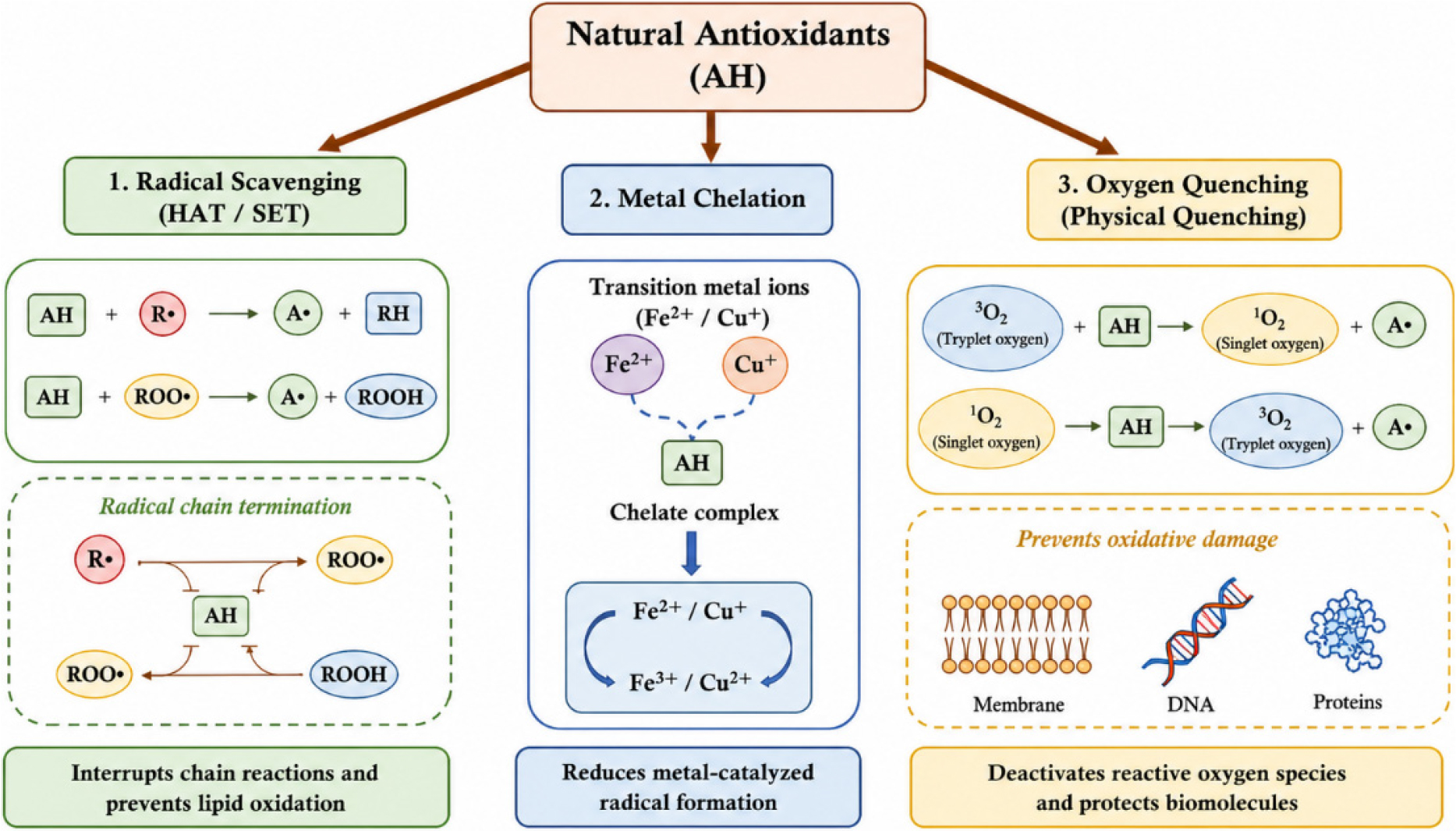
Fig. 1.
Schematic representation of the mechanisms of natural antioxidants (AH). Antioxidants inhibit oxidative processes through three primary pathways: (1) radical scarvenging via hydrogen atom transfer (HAT) or single electron transfer (SET), neutralizing reactive radicals (R•, ROO•) and terminating chain reactions; (2) metal chelation, where antioxidants bind transition metal ions (Fe2+/Cu2+), suppressing Fenton-type reactions and reducing hydroxyl radicals (•OH) dormation; and (3) oxygen quenching, where singlet oxygen (1O2) is converted to its ground state (3O2), preventing oxidative damage.
Table 2 combines recent research on the sources, effective concentrations, storage conditions, and reported impacts, mainly on lipid oxidation, to provide a clear picture of the practical application of natural antioxidants in pork and pork-based products. These studies show that a variety of plant-derived extracts, fruits, spices, and other natural sources can effectively enhance antioxidant capacity, delay lipid oxidation, and preserve color and sensory qualities in pork during storage. The information emphasizes the importance of optimizing the antioxidant’s form and concentration, as product type, packaging, and storage conditions can also affect a product’s effectiveness.
Table 2.
Effect of natural antioxidants on controlling lipid oxidation in pork and pork-based products.
| Natural source of antioxidants |
Substrate best concentration | Storage condition | Main result | References |
| Raw ground pork meat | ||||
| Haematococcus pluvialis | 0.15 g·kg-1 |
Vacuum-packed with film semi-permeable to oxygen and stored at 4℃ for 7 days. |
Higher extract doses delayed lipid oxidation and improved color stability. | Pogorzelska et al. (2018) |
| 0.3 g·kg-1 | ||||
| 0.45 g·kg-1 | ||||
|
Epazote (Chenopodium ambrosioides L.) | 50 mL·kg-1 |
The treatments were stored under retail display conditions for 9 days using polystyrene trays wrapped with PVC film, kept at 4 ± 1℃, and illuminated by fluorescent light. |
Lower TBARS values were observed compared to the control. | Villalobos-Delgado et al. (2017) |
| Nutmeg | 0.5% |
Samples were sealed in low-density polyethylene packaging and kept at 4℃ for 13 days. |
Clove extract exhibited the greatest antioxidant activity, making it the most effective antioxidant and antimicrobial agent. However, cardamom and caraway had relatively low antioxidant activity, but significantly improved it. | Muzolf-Panek et al. (2019) |
| Allspice | ||||
| Bay leaf | ||||
| Cloves | ||||
| Caraway | ||||
| Cardamom | ||||
| Baechu kimchi | 1 g·kg-1 |
Anearobically packed in PA/PE film bags and stored at 4 ± 1℃ for 14 days. |
TBARS and MetMb levels were lower in all treated samples. Got kimchi extract demonstrated the strongest antioxidant effect, while white kimchi extract showed the weakest activity. | Lee et al. (2019) |
| Got kimchi | 1 g·kg-1 | |||
| Puchu kimchi | 1 g·kg-1 | |||
| White kimchi | 1 g·kg-1 | |||
| Terminalia arjuna | 1% |
Aerobically packed in low-density polyethylene bags, the samples were stored under refrigerated conditions (4 ± 1℃) for 9 days. |
Arguna fruit extract significantly (p < 0.05) reduced TBARS values, peroxide formation, and protein carbonyl development in raw pork meat compared with the control during storage. | Chauhan et al. (2018) |
| Lychee (Litchi chinensis Sonn.) | 0.1% |
All treated samples and the blank were stored in the refrigerator at 4℃ for 15 days. |
Lychee seed water extract was shown to effectively prevent adipogenesis and decrease lipid oxidation. | Qi et al. (2015) |
| 0.5% | ||||
| Phyllanthus acidus | 2.5 g·kg-1 | - |
In minced pork, the crude water extract of P. acidus leaves more effectively suppressed lipid oxidation and showed superior antioxidant activity relative to the control and butylated hydroxytoluene. | Nguyen et al. (2017) |
| 5.0 g·kg-1 | ||||
| Dried minced pork slices | ||||
| Mulberry juice | 0.1% |
Vacuum-packed and stored at room temperature (25 ± 3℃). |
Samples treated with mulberry juice showed significantly lower TBARS values than the control group. | Cheng et al. (2018) |
| Precooked pork chops | ||||
|
Winter savory (Satureja montana L.) | 2.2 µL·g-1 |
Stored with plastic boxes covered with aluminum foil at 4℃ for 6 days. |
Winter savory essential oil and winter savory supercritical first extract showed a low TBARS value. | Jokanović et al. (2020) |
| Fried meatballs | ||||
| Thyme | 0.05% |
Stored in polyethylene bags for 180 days. |
Green tea extract-treated meatballs exhibited higher levels of oxidation than those formulated with thyme or rosemary. | Hęś and Gramza-Michałowska (2017) |
| Green tea | 0.05% | |||
| Rosemary | 0.02% | |||
| Pork patty | ||||
| Oak wood | 0.05% |
Contained in thermoformed polypropylene plastic packaging. The patties were stored for 12 days at 4℃ in a vertical display case with transparent glass doors, illuminated by a white-light lamp. |
Samples treated with oak wood extracts exhibited reduced lipid oxidation, enhanced antioxidant capacity, and suppression of enterobacterial growth. | Soriano et al. (2018) |
| 0.5% | ||||
| 1.0% | ||||
| Red pitaya | 250 mg·kg-1 |
Samples were stored for 18 days at 2 ± 1℃ under fluorescent lighting, simulating typical supermarket conditions. |
Treated samples exhibited lower TBARS levels (1.21 vs. 2.44 mg MDA·kg-1) than the control. | Bellucci et al. (2021) |
| 500 mg·kg-1 | ||||
| 1,000 mg·kg-1 | ||||
| Açaí fruit | 250 mg·kg-1 |
Samples were stored for 10 days at 2 ± 1℃ in vacuum-packed nylon-polyethylene bags. |
Increasing concentrations of açaí extract enhanced antioxidant activity and decreased lipid oxidation, with TBARS values of 0.379, 0.293, and 0.217 mg MDA·kg-1. | Bellucci et al. (2022) |
| 500 mg·kg-1 | ||||
| 750 mg·kg-1 | ||||
| Paprika | 5 mg·g-1 |
Stored under the refrigerator at 7℃ for 14 days. |
At 14 days, the control exhibited higher pH and cooking loss, and greater lipid and protein oxidation than paprika-treated patties (p < 0.05). | Jeong et al. (2023) |
| Mesquite Leaves | 0.05% (w/w) |
Patties were stored under refrigerated (4℃) conditions. |
During the entire storage period, lipid oxidation increased, yet the treated samples showed the lowest level of conjugated dienes and TBARS compared to the control. | Ramírez-Rojo et al. (2019) |
| 0.1% (w/w) | ||||
|
Blue pea flower petal (Clitoria ternatea) | 0.02% |
The samples were displayed for 12 days under white fluorescent light in a 4℃ refrigerator with a glass door, simulating typical supermarket conditions. |
The results indicated that pork patties containing blue pea flower extract exhibited strong radical-scavenging activity and significantly lower TBARS values. | Pasukamonset et al. (2017) |
| 0.04% | ||||
| 0.08% | ||||
| 0.16% | ||||
| Annatto (Bixa orellana L.) | 0.1% | Stored at 4 ± 1℃ for 14 days. |
Annatto seed-treated samples exhibited significantly lower TBARS and peroxide values than the control (p < 0.05). | Van Cuong and Chin (2016) |
| 0.25% | ||||
| 0.5% | ||||
|
Vine tea (Ampelopsis grossedentata) | 0.1% |
The cooked samples were cooled and then stored in oxygen-permeable bags at 4 ± 1℃ for 8 days |
The treatment containing vine tea significantly suppressed the rise in TBARS values and carbonyl compound formation (p < 0.05). | Zhang et al. (2019) |
| 0.3% | ||||
| Pork meatballs | ||||
|
Litchi flower (Litchi chinensis Sonn.) | 0.1% |
The meatballs were vacuum-packed (760 mmHg) in high-density polyethylene bags and stored at 20℃ for 4 weeks. |
Meatballs formulated with litchi flower showed decreased TBARS values (p < 0.05) and increased thiol group content (p < 0.05). | Ding et al. (2015) |
| 0.5% | ||||
| 1% | ||||
| 1.5% | ||||
| Pork sausage | ||||
| Spirulina platensis | 0.1% (w/w) |
After cooling, the sausages were vacuum-packed and stored at 4℃ for 24 days. |
Samples formulated with Spirulina platensis exhibited significantly (p < 0.05) higher DPPH radical-scavenging activity and lower TBARS values than the control, and the antioxidant effect depended on the dose. | Luo et al. (2017) |
| 0.25% (w/w) | ||||
| 0.5% (w/w) | ||||
| Tomato | 50 mg GAE·kg-1 |
Using a vacuum packager, the samples were sealed in LDPE bags and stored at 2℃ in the dark for 20 days. |
The study reported that a tomato had stronger inhibition of lipid oxidation in smoked and scaled sausages than in smoked and dried sausages. | Cadariu et al. (2022) |
| 90 mg GAE·kg-1 | ||||
| 180 mg GAE·kg-1 | ||||
| 270 mg GAE·kg-1 | ||||
|
Banana inflorescences (male flower) | 0.5% |
The raw sausages were arranged in polystyrene trays, sealed with plastic wrap, and refrigerated at 4 ± 1℃ for 28 days. |
The addition of banana inflorescences effectively maintained TBARS values below the detection limit throughout the storage. | Rodrigues et al. (2020) |
| 1% | ||||
| 1.5% | ||||
| 2% | ||||
|
Black tea and green tea (Camellia sinensis L.) | 0.05% | Stored under 37℃. |
Green tea-treated samples showed significantly greater (p < 0.05) DPPH radical-scavenging activity compared with samples containing black tea. Both tea extracts at all concentrations significantly reduced TBARS levels in uncured pork sausages during storage. | Jayawardana et al. (2019) |
| 0.1% | ||||
| 0.2% | ||||
| 0.3% | ||||
| Caesalpinia sappan L. | 0.1% |
Cooled sausages were packed in oxygen-permeable polyethylene bags and kept at 4℃ for 4 weeks. |
Sausages with 0.0035% sodium nitrite showed the highest DPPH activity, followed by Caesalpinia sappan. The Caesalpinia sappan also reduced lipid oxidation to levels similar to those achieved with 0.007% sodium nitrite treatment. | Yim et al. (2019) |
| Bee pollen | 0.2% |
Stored for 30 days at 4℃ using plastic bags. |
Throughout storage, TBARS values were significantly lower (p < 0.05) in bee pollen-treated samples than in the control or sodium erythrobate treatments. | De Florio Almeida et al. (2017) |
| Chia seed (Salvia hispanica) | 1% |
Stored at 4 ± 1℃, using plastic bags for 28 days. |
A 2% chia seed extract inhibited lipid oxidation in pork sausages, resulting in lower TBARS values (1.12 mg MDA·kg-1) than the control (1.64 mg MDA·kg-1) after 28 days. | Scapin et al. (2015) |
| 1.5% | ||||
| 2% | ||||
|
Guava leaves (Psidium guajava L.) | 3,000 ppm |
Samples were kept in a refrigerator at 4℃ in darkness for 0, 1, 4, 7, 10, and 14 days. |
From day 4, guava leaf extract (≥ 4,000 ppm) improved antioxidant capacity, reduced lipid oxidation, and maintained color in pork compared to control or BHT-added samples. | Tran et al. (2020) |
| 4,000 ppm | ||||
| 5,000 ppm | ||||
| 6,000 ppm | ||||
The capacity of natural antioxidants to maintain the oxidative stability and sensory characteristics of raw pork has been shown in numerous studies. When given at 0.15 - 0.45 g·kg-1, astaxanthin produced from Haematococcus pluvialis significantly reduced TBARS readings, related lipid oxidation, and improved color (a value) without affecting microbiological quality (Pogorzelska et al., 2018). According to Villalobos-Delgado et al. (2017), Chenopodium ambrosioides extracts, both water and ethanolic, successfully decreased lipid oxidation and maintained color during refrigerated storage. The ethanolic extract also showed modest antibacterial properties. Terminalia arjuna fruit extract (1% w/w) preserved overall meat quality by reducing protein carbonyl production and inhibiting lipid oxidation (Chauhan et al., 2018). At 2.5 - 5 g·kg-1, phenolic-rich Phyllanthus acidus leaf extract successfully reduces lipid oxidation while maintaining sensory quality (Nguyen et al., 2017). Together, these studies show that plant- and algal-derived antioxidants can shield raw pork against oxidative stress, with phenolic content and antioxidant concentration correlating with this protection.
Many studies have examined the use of natural antioxidants in processed pork products, such as meatballs, sausages, and dried pork. The anthocyanin-rich mulberry juice decreased TBARS levels and protein carbonyl production in dried-minced pork slices, and its antioxidant chemicals were better retained when encapsulated with β-cyclodextrin during thermal processing (Cheng et al., 2018). According to Ding et al. (2015), adding litchi flower extract to meatballs reduced TBARS values and raised thiol content, successfully preserving proteins while preserving color and sensory quality during refrigeration. These results show that natural oxidants can act as both natural colorants and lipid-protective agents. Furthermore, preserving antioxidant potency during processing depends on the type of extract, its concentration, and protective measures such as encapsulation.
Polyphenol-rich extracts, such as those from green tea, cranberries, and pomegranates, have been shown to reduce lipid oxidation and delay color deterioration in cured or smoked pork; however, processing can somewhat diminish antioxidant activity (Kim et al., 2023). Despite this, these extracts continue to enhance sensory quality, color retention, and shelf life. Their slight antibacterial properties help maintain product stability during storage.
Factors Affecting Antioxidant Efficiency in Pork Systems
The effectiveness of antioxidants in pork and pork-based products is influenced by multiple factors, including formulation, processing, and storage conditions. The concentration of the antioxidant is critical: insufficient levels may fail to inhibit oxidation, whereas excessive levels can negatively affect sensory attributes and product acceptability. The food matrix also plays a significant role, as the distribution of lipids, proteins, and water can influence antioxidant accessibility and activity (Park et al., 2012; Vahid et al., 2023). Interactions with other ingredients, such as salts, proteins, and pro-oxidant metal ions (e.g., Fe2+ and Cu2+), may either enhance or reduce antioxidant performance. In addition, packaging conditions, including oxygen availability and light exposure, strongly affect oxidative stability, with vacuum and modified atmosphere packaging generally improving antioxidant efficiency. Storage conditions, particularly temperature and duration, further determine the oxidation rate and the protective capacity of antioxidants (Sohaib et al., 2017). Therefore, optimizing these factors is essential to maximizing the effectiveness of antioxidant systems in pork products.
In addition to their antioxidative benefits, natural antioxidants, particularly plant-derived extracts rich in essential oils or polyphenols, may influence the sensory attributes of pork products. At higher concentrations, these compounds can impart herbal, bitter, or astringent notes and may alter aroma, flavor, and overall acceptability (Aguiar Campolina et al., 2023). Therefore, careful optimization of antioxidant dosage is essential to achieve oxidative stability without compromising sensory quality. Lower or threshold-level inclusion is often preferred to minimize off-flavors while maintaining efficacy. The selection of antioxidant type is also critical, as different extracts vary in flavor intensity and compatibility with meat systems (Aguiar Campolina et al., 2023). Technological approaches, such as microencapsulation or incorporation into carrier systems, can help control the release of active compounds and reduce the direct sensory impact. Additionally, combining natural antioxidants with complementary ingredients or using synergistic blends may enhance oxidative stability at lower concentrations, thereby preserving desirable attributes, including flavor, aroma, and texture, as well as tenderness (Schilling et al., 2018).
Conclusion
Natural plant, fruit, algae, and spice antioxidants effectively reduce lipid oxidation in pork and pork-based products, thereby improving color, flavor, and overall sensory quality. Compounds such as phenolics, flavonoids, carotenoids, and anthocyanins act as radical scavengers and metal chelators, delaying the formation of hydroxyperoxides and secondary oxidative products. Their effectiveness depends on the type of extract, concentration, processing, and storage conditions. However, when incorporating natural antioxidants into pork and pork-based products, careful consideration must be given to the optimal inclusion level, as excessive or imbalanced dosages may adversely affect product quality, including sensory attributes and consumer acceptance.